How Petersburg’s Historic Homes Shape Your Home Search
May 28, 2026
May 28, 2026
Thinking about buying a historic home in Petersburg? You are not just shopping for square footage. You are also choosing a style, a floor plan, and a level of upkeep that can shape your daily life in very real ways. If you understand how Petersburg’s older homes differ from newer ones, you can search with more confidence, ask better questions, and avoid surprises. Let’s dive in.
Petersburg is the county seat of Menard County, and the city traces its beginnings to 1833. According to the city, Abraham Lincoln surveyed the town in 1835 and 1836, and Petersburg still includes Victorian-era homes on the bluffs along with some original cobblestone streets.
That history is not just background. It directly affects what you may see during your home search, especially in and around the historic core. The City of Petersburg says preservation ordinances and a preservation commission help protect the city’s historic character from inappropriate alterations, incompatible new construction, and demolition.
Petersburg’s historic core also has national recognition. The Petersburg Historic District is listed on the National Register of Historic Places, with the Illinois listing showing the district was added in 1976 and expanded in 1986.
When you tour older homes in Petersburg, the architecture can tell you a lot before you even step inside. The town includes examples tied to both earlier formal styles and later Victorian-era design.
Local landmarks reflect that mix. Three Pines is described as an Italianate-style mansion built in 1875, and the Menard County Historical Society museum is described as a Victorian-styled building dating to 1889.
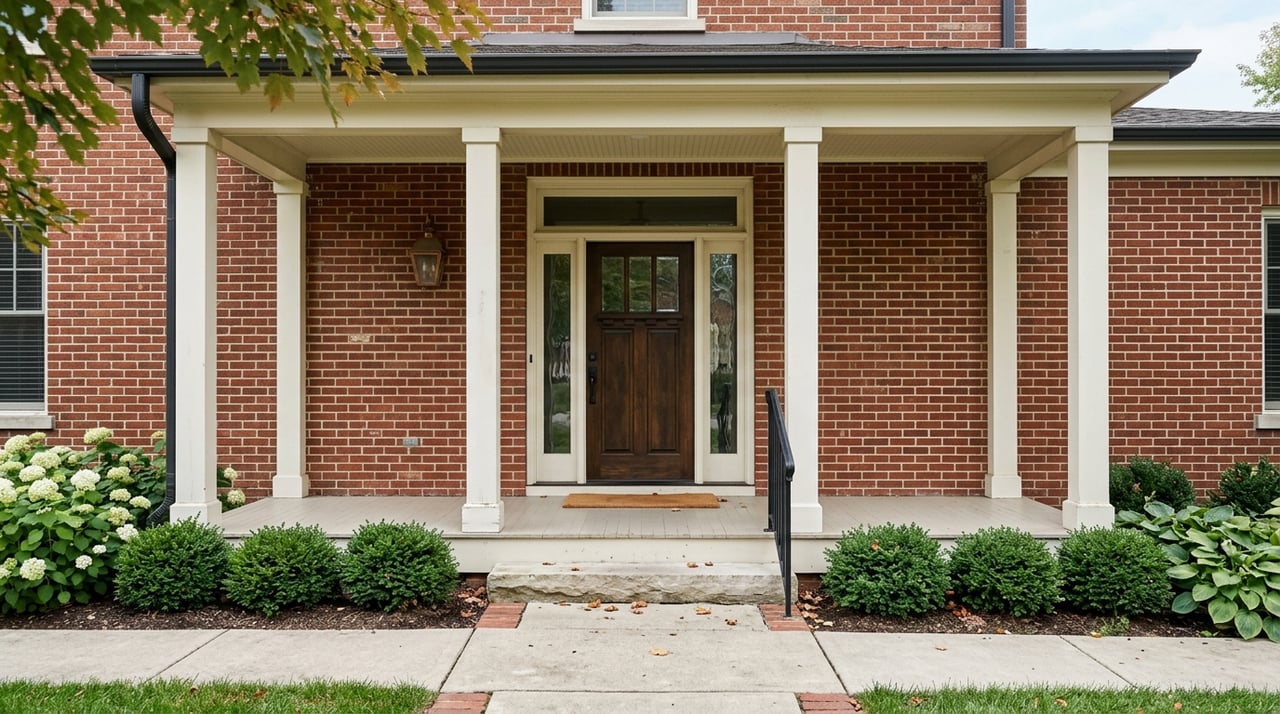
Homes influenced by Federal and Greek Revival architecture often emphasize symmetry. You may notice centered entries, evenly spaced sash windows, refined trim details, and a more balanced front appearance.
Inside, that often translates to a more formal layout. Rooms may feel more defined, with a center-entry or center-hall arrangement that creates a traditional flow instead of an open, flexible feel.
Italianate homes usually feature low roofs, overhanging eaves, brackets, and tall windows. Some also include projecting porches, towers, or cupolas.
For you as a buyer, the big takeaway is often the floor plan. Italianate homes commonly have more asymmetrical layouts, so rooms may not line up in the neat, mirrored way you might expect in an earlier house.
Queen Anne houses are often more visually complex. You may see intersecting gables, porches, dormers, patterned shingles, spindlework, turrets, or changing wall planes.
Inside, these homes can feel less boxy and more varied. The National Park Service notes that Queen Anne interiors often flow around a central staircase, which can create a less predictable but more character-rich layout.
Historic homes can be beautiful, but beauty alone does not tell you whether the layout fits your life. That is why it helps to connect architectural style with day-to-day function.
In Petersburg, earlier homes may feel more symmetrical and formal, while later Victorian homes may have irregular footprints, wraparound porches, and room flow that changed over time. That difference can affect how you place furniture, where you set up a home office, and how easily you could update the space later.
As you tour homes, pay attention to practical details like these:
A historic home can absolutely work for modern living. The key is knowing whether you want a home that feels traditional and defined or one that feels more flexible and evolved over time.
In a small market like Petersburg, condition and update level can play a major role in both pricing and competition. Recent local data suggest buyers may see a meaningful difference between well-kept historic homes and properties that need more work.
Zillow reported an average Petersburg home value of $205,174 as of March 31, 2026, with 17 homes for sale and 7 new listings on that date. Redfin reported a March 2026 median sale price of $160,000, a median sale price per square foot of $91, and a median of 3.7 days on market.
Those figures measure different things, so they work better as a range than as one exact benchmark. For you, the practical takeaway is simple: updated character homes may feel limited when they hit the market, while older homes needing repairs may come in lower and require more planning.
A general home inspection is the right place to start, but historic homes call for extra attention. Older systems, materials, and construction methods can create issues that are not obvious during a quick showing.
If you are considering a historic home in Petersburg, focus on the parts of the house where age can have the biggest impact on cost, safety, and renovation plans.
Ask whether there are cracks, signs of settlement, or evidence of past structural repairs. Older foundations can have issues that were covered by later finishes, so it is worth asking your inspector to look closely at any signs of movement.
Find out the roof’s age and whether older materials or original wood sheathing remain. In older homes, roof replacement can be more involved if additional structural or sheathing work is needed.
Many older houses contain components from more than one era. Ask whether the home has mixed-age wiring, an older panel, or other outdated electrical components, and whether a licensed electrician should take a closer look.
Ask about the age and type of supply pipes, visible leaks, obsolete plumbing components, and the condition of older heating equipment. It is also wise to ask whether chimneys or venting systems are working as intended.
Original windows can be a major part of a historic home’s appeal. Ask about wood condition, operation, paint failure, and signs of rot at sills or corners.
If a home was built before 1978, lead-based paint may be present unless testing shows otherwise. Deteriorating paint and renovation work can create lead dust, especially around windows, doors, floors, porches, and stairways.
You should also ask whether there may be older materials in flooring, roofing, insulation, or ducts that need attention before any remodeling begins. Historic homes reward careful planning, and that planning should start before you finalize your offer.
Not every older home comes with the same level of oversight, but that question matters in Petersburg. InterNACHI notes that landmarked homes may come with requirements that limit changes, and the City of Petersburg states that preservation ordinances and a preservation commission are used to protect historic character.
That does not mean you should avoid historic homes. It means you should ask early whether a property is designated or located in an area where exterior changes, demolition, or certain alterations may be reviewed.
If you love the character of an older home but also want to make updates, this step can save you time and help you plan realistically. It is much easier to understand those limits before you buy than after you move in.
If Petersburg’s historic homes appeal to you, your search will go better when you balance emotion with due diligence. Charm matters, but so do layout, maintenance needs, and any rules tied to the property.
A smart approach often includes:
Historic homes can offer detail, craftsmanship, and a sense of place that newer homes often cannot match. When you know what to watch for, you can enjoy that character without losing sight of the practical side of the purchase.
If you are weighing older homes in Petersburg, having local guidance can make the process much easier. The team at Cindy Grady II, Inc. can help you compare options, coordinate the right next steps, and move forward with clarity.
Stay up to date on the latest real estate trends.
3701 Wabash Ave Springfield IL 62711