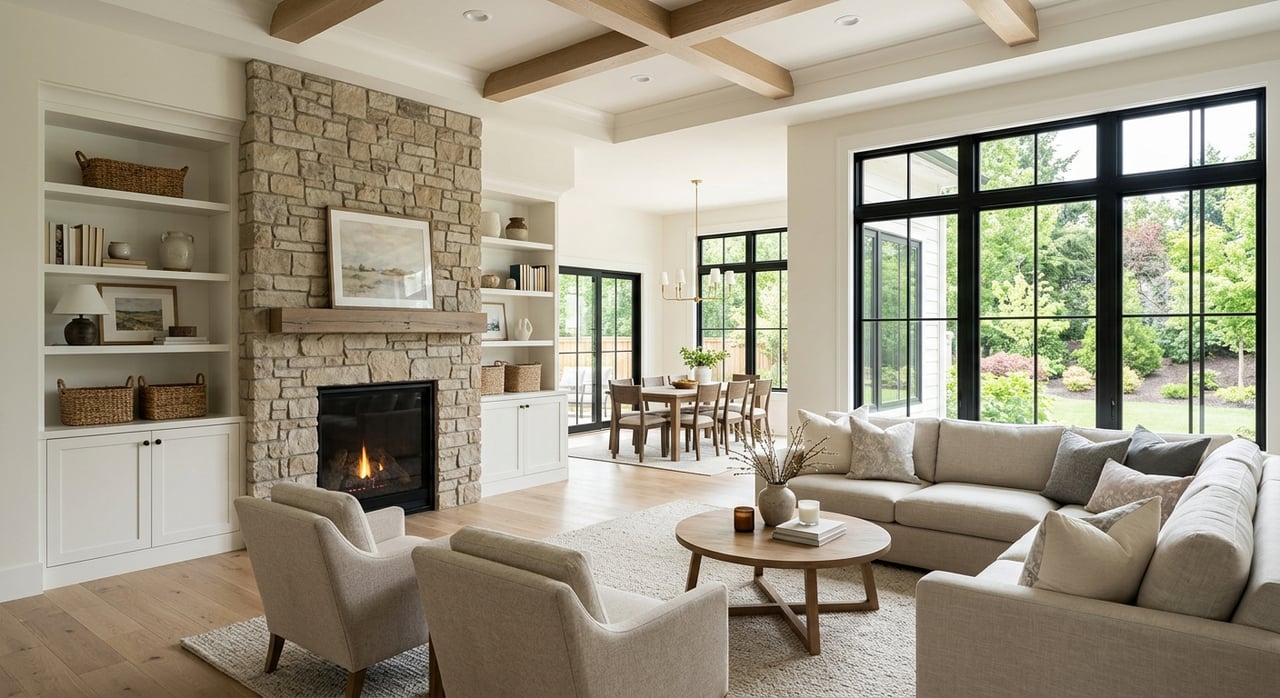
Upsizing Your Home in Rochester IL With a Clear Plan
June 25, 2026
June 25, 2026
Wondering how to sell your current home and buy a bigger one in Rochester without turning your life upside down? You are not alone. Moving up within the same community can be exciting, but it also takes careful timing, smart pricing, and a clear plan. The good news is that with the right sequence, you can make the process feel far more manageable. Let’s dive in.
Rochester is a small Sangamon County village just southeast of Springfield, and that matters when you are making a move-up plan. In a smaller market, each listing and sale can have a bigger effect on what buyers see and what sellers expect.
That is especially important if you want to stay local. Rochester CUSD 3A reports five schools, 2,063 students, and 283 employees, so many households looking for more space also want continuity in their daily routine, commute, and community ties.
Recent housing numbers show an active market, but they also show why broad headline figures only tell part of the story. Depending on the source and timing, recent reports have shown a median sale price near $219,868, an average home value near $291,878, and a median listing price around $320,000.
Those numbers are not necessarily in conflict. They reflect different data sets, date ranges, and ways of measuring the market. In a place like Rochester, the most useful guide is not one big number. It is a pricing strategy built around recent comparable sales, current competition, and MLS-level detail.
For added context, Sangamon County's Q1 2026 median sales price was $200,000, with 154 homes in inventory and 25 days on market. Countywide data can help frame the conversation, but Rochester-specific comps still matter most when you are trying to price your current home and judge what you may need to pay for your next one.
Before you look seriously at the next house, get clear on what your current home could realistically sell for. That single step helps shape your budget, down payment, moving timeline, and negotiating power.
A strong move-up plan usually starts with these questions:
This is where local guidance matters. In a small market, pricing too high can cost you valuable time, and a home that sits longer can become harder to sell.
If you are upsizing, you may be tempted to pour money into your current home before listing it. Usually, that is not the best first move. For many Rochester sellers, the practical focus is on visible, low-friction improvements that make the home feel well cared for and easy to picture living in.
Fannie Mae recommends budgeting for home-improvement costs, closing costs, and moving expenses before listing. It also recommends reviewing local inventory, recent sales, and local pricing so you can make informed decisions from the start.
The goal is not to fully remodel before you move. The goal is to reduce distractions and present the home cleanly.
Useful pre-listing steps often include:
National staging research also supports this approach. Seller recommendations most often center on decluttering, cleaning, and curb appeal, and many agents report that staging helps homes sell faster.
If you do not want to stage every room, start where it counts most. Research highlights the living room, primary bedroom, and kitchen as the rooms buyers pay closest attention to.
That does not mean adding elaborate decor. It usually means neutral presentation, open surfaces, good lighting, and furniture placement that helps rooms feel functional and spacious.
One of the biggest mistakes move-up buyers make is starting the home search before they fully understand their financing options. If you are selling and buying at the same time, that can create unnecessary stress very quickly.
The CFPB recommends getting at least three preapprovals. A preapproval letter helps show sellers that you are serious, and it gives you a clearer sense of what you can comfortably afford. It also usually expires in 30 to 60 days, so timing matters.
When you upsize, the monthly payment is only part of the picture. You will also want to think about:
Fannie Mae notes that many mortgage options require at least 3% down, while putting down 10% or 20% can reduce your monthly payment. The right choice depends on your cash position, your sale proceeds, and how much flexibility you want during the move.
Some households need their next home before their current home closes. In that case, temporary financing may come up in your planning.
CFPB mortgage rules treat bridge loans as temporary financing used to buy a new dwelling when the borrower plans to sell the current one within 12 months. That does not make a bridge loan right for everyone, but it does show why early lender conversations are so important when your timeline is tight.
When you find the right next home in Rochester, your offer needs to be competitive and realistic. In a small market, desirable homes can still move quickly, even when inventory is limited.
An offer often includes more than just price. Fannie Mae notes that it may also cover earnest money, credits, contingencies, timing, and in some cases an escalation clause.
CFPB recommends making offers contingent on financing and a satisfactory inspection. Those terms help protect you during a transaction that already has more moving parts than a simple purchase.
A balanced offer may need to consider:
The best offer is not always the highest one. Often, it is the one that matches the seller's timing while still protecting your finances and your ability to close.
Selling one home while buying another rarely happens in one neat step. Even in efficient transactions, there are multiple stages to coordinate, including prep, listing, showings, offer negotiations, inspections, title work, settlement, and closing.
That is why sequencing matters so much. Fannie Mae notes that sellers should think early about whether they are ready for a quick sale or need more time to find their next home.
A practical same-market upsizing plan in Rochester usually looks like this:
This phased mindset can reduce stress because it gives you decision points along the way. Instead of hoping everything lines up perfectly on its own, you can build a plan that accounts for real-world timing.
An upsizing move has two jobs happening at once. One side involves getting your current home ready, marketed, shown, and sold. The other involves financing, showings, offer strategy, inspections, and closing details on the next property.
That is one reason a team-based approach can be so useful. When multiple steps are moving at the same time, responsive communication and hands-on coordination can make the process feel much more organized.
For example, you may need help with:
With a full-service local team, you are not trying to juggle every moving part alone.
If you are thinking about selling and moving into a larger home within Rochester, the smartest approach is usually simple. Price your current home carefully, prepare it well without over-improving, get financing lined up early, and coordinate both transactions around timing rather than guesswork.
Rochester's market is active, but it is also small enough that every detail matters. Recent comps, clean presentation, strong offer structure, and steady coordination can make the difference between a stressful move and a smooth one.
If you are ready to map out your next step in Rochester, Cindy Grady II, Inc. can help you build a local plan for selling, buying, and coordinating the entire move with confidence.
Stay up to date on the latest real estate trends.

3701 Wabash Ave Springfield IL 62711