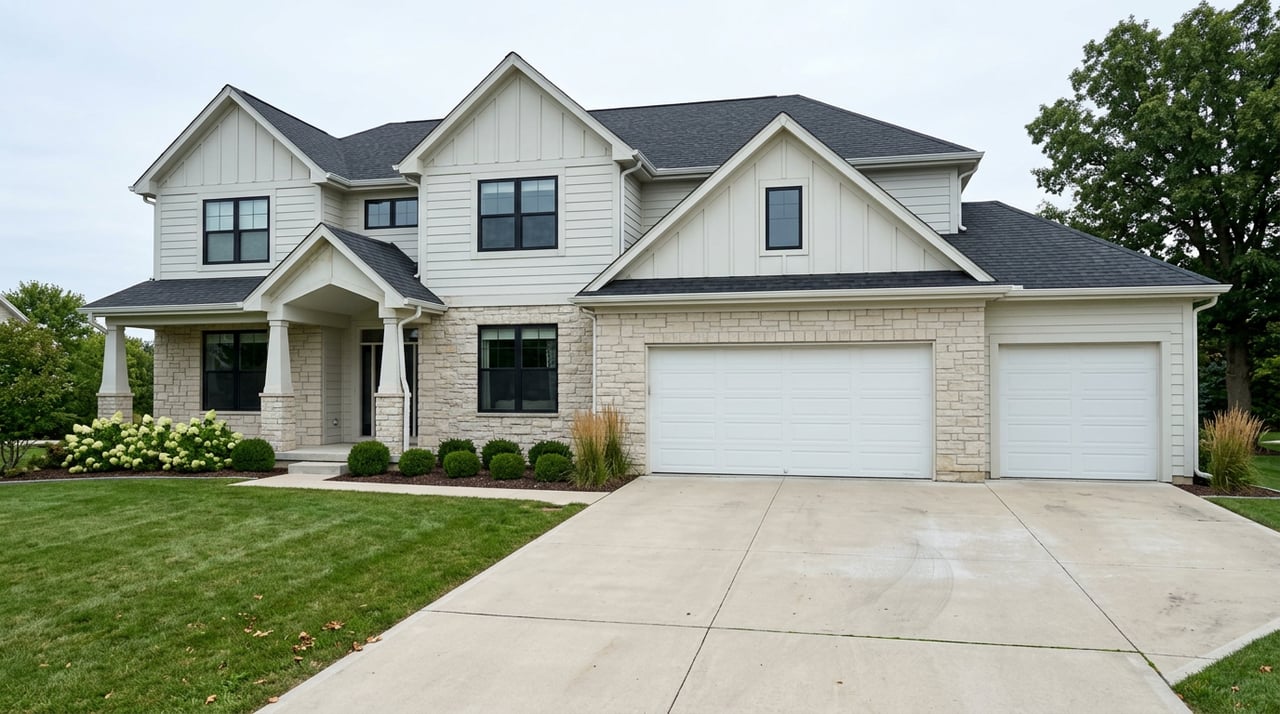
Buying New Construction In Chatham? Read The Contract Before You Read The Floor Plan
September 17, 2026
September 17, 2026
If you have bought a home before, you already know the rhythm of an earnest money check. You write it for one or two percent of the offer price, it goes into escrow, and if the deal falls through for a reason your contract allows, you get it back. That rhythm does not carry over when the seller is a builder instead of a homeowner, and in Chatham right now, where new subdivisions are filling in faster than almost anywhere else in Sangamon County, that gap between what buyers expect and what the contract actually says is where most of the friction shows up.
The mismatch is not a trick. It is math. A homeowner selling a resale property has already paid for the house. A builder selling you a home in The Highlands or Manor Hill II has not finished paying for it yet. The lot, the crew, the lumber order, the permits: all of that is the builder's money on the table before your signature ever lands on the page. Every clause in a builder's contract that feels tighter than what you are used to exists to protect that exposure.
On a typical resale offer, earnest money runs one to two percent of the purchase price. On new construction, national data on builder contracts puts that figure at five percent or more, and some builders ask for as much as ten. That is not a Chatham-specific number pulled from any one builder's paperwork, but it reflects the standard the industry works from, and it is the pattern buyers here should walk in expecting.
The reason is straightforward once you see it from the builder's side. A homeowner selling a resale house is not carrying construction financing while your inspection period runs. A builder is. The larger deposit is the builder's way of making sure you are not window shopping with their crew's schedule.
Resale contracts in Illinois are built around a standard form with negotiated contingencies: financing, inspection, sometimes an appraisal gap. Builder contracts are usually pre-written by the builder's own attorney, and they are built to protect the builder's construction timeline first.
That shows up in a few consistent ways:
A spec home that is seventy or eighty percent complete already has its structure and layout locked. The contract is written around that reality. Once framing is up, "customization" mostly means finishes, not floor plan changes.
None of this means a builder is dealing in bad faith. It means the paperwork protects the party who is financing the construction, and that is the builder, not you.
This is not abstract. Chatham has an active pipeline of new subdivisions right now, and each one tells you something about the price band and build style you are actually contracting for.
| Subdivision | Builder or Developer | What It Signals |
|---|---|---|
| The Highlands | Buildable lots, build-to-suit | Newer subdivision close to town amenities but set back from traffic |
| Manor Hill II | Buildable lots in Chatham School District | Established neighborhood infill, build-to-suit |
| Foxx Creek Estates | Kathy Tega, The Real Estate Group | Ranch-style new construction with open floor plans |
| Savannah Pointe | Montgomery Builders | Larger finishes, partially finished basements, 3-car garages |
| Bogey Hills | New-construction duplex product | Ranch duplexes with zero-step entry, Springfield address, Chatham School District |
| Kreston Place | Fidelity Homes, a JR Reiser production | Ranch-style, close to shopping and medical facilities |
| Breckenridge Manor | Positioned as Chatham's premier luxury development | Lots backing to a tree line near Chatham Community Park |
Across these communities, new-build prices have recently ranged from roughly $362,730 to $610,700, with homes running between about 1,876 and 3,674 square feet and four to five bedrooms. That range matters more than the median. A buyer comparing a Foxx Creek ranch to a Breckenridge Manor lot is not comparing two versions of the same contract. They are comparing two different builders, two different deposit structures, and two different timelines, even though both sit inside Chatham's borders.
Once you are under contract, the inspection period is where builder deals move fastest and where buyers get caught off guard most often. Industry-standard spec home contracts commonly give buyers an inspection window as short as fifteen days. During that window you can hire your own inspector, order an appraisal, and walk away if something is wrong. Once the window closes, the contract generally treats your earnest money as non-refundable and your acceptance of the home's physical condition as final.
That single deadline is worth marking on a calendar the day you sign. A buyer who treats the fifteen-day window the way they would treat a thirty-day resale inspection period risks losing a deposit that ran five figures over a repair item that could have been caught and negotiated in week one.
Independent inspection is worth paying for even when the builder offers their own. The builder's inspector confirms the home meets the builder's own standard. Your inspector works only for you, and that difference has caught real issues in new builds before.
The final walk-through, usually scheduled a few days before closing, is your last chance to flag anything before the keys change hands. Bring a list. Builders expect it.
Most builders in the Chatham market structure their coverage the same way: a one-year workmanship warranty, a two-year systems warranty covering things like plumbing and electrical, and a ten-year structural warranty covering the foundation and framing. Those three numbers are worth writing down before you close, because they define what you can call the builder back for and when that clock runs out. A cosmetic drywall crack found in month fourteen is a different conversation than the same crack found in month eight.
Here is the part that ties the contract terms back to the market itself. As of August 2026, homes across Illinois were averaging 43 days on market statewide, a pace that generally favors sellers when inventory stays tight. Earlier this year, homes in Springfield were moving even faster, closer to ten days on average with prices up roughly 22 percent year over year. Chatham's own new-construction listings have shown a similar pattern this year, with homes moving in around three weeks, well ahead of the wider pace Illinois is seeing overall.
When a market moves that fast, builders have very little reason to loosen contract terms to win a buyer. Demand is already there. That is worth sitting with for a moment, because it reframes the whole conversation. The tight inspection window and the larger deposit are not aggressive negotiating tactics aimed at any one buyer. They are what a builder can hold firm on when the next buyer is already touring the model home behind you.
Chatham's growth is not a short-term flurry either. The Village broke ground this year on a new $22 million municipal center, a project that will replace three current buildings dating to the 1980s and bring city administration, utility billing, and the police department under one roof. Mayor Dave Kimsey has pointed to a move-in target of late summer or early fall 2027. Public investment on that scale does not happen in a village expecting its population growth to slow down, and it is one more sign that the demand supporting these new subdivisions is not a temporary spike.
Do I need my own real estate agent if I'm buying directly from a builder? Yes. The salesperson at the model home represents the builder's interests. A buyer's agent represents yours, and in most new-construction deals the builder pays that agent's commission, so it costs you nothing extra to have someone reviewing the contract on your side.
Is the earnest money ever refundable after the inspection period ends? Generally only if a specific contingency in the contract, like financing or appraisal, is written in and triggered. Read that section of your contract closely before you sign, since builder contracts vary in what they include.
Should I still hire an independent inspector if the builder already inspected the home? Yes. The builder's inspection confirms the home meets the builder's own standard. An inspector working for you is looking for things a builder's own team has no incentive to flag.
If you are circling a lot in The Highlands, weighing a Foxx Creek ranch against a Savannah Pointe two-story, or trying to figure out what a Breckenridge Manor contract actually commits you to, get a second set of eyes on the paperwork before you sign anything the builder hands you. Cindy Grady Bunch has walked Chatham buyers through exactly this process, subdivision by subdivision. Request a free consultation and home valuation before your inspection clock starts running, not after.
Stay up to date on the latest real estate trends.

3701 Wabash Ave Springfield IL 62711